Nobody Packed Up the Mentoring: Lessons From an Agency That Went Remote by Mistake
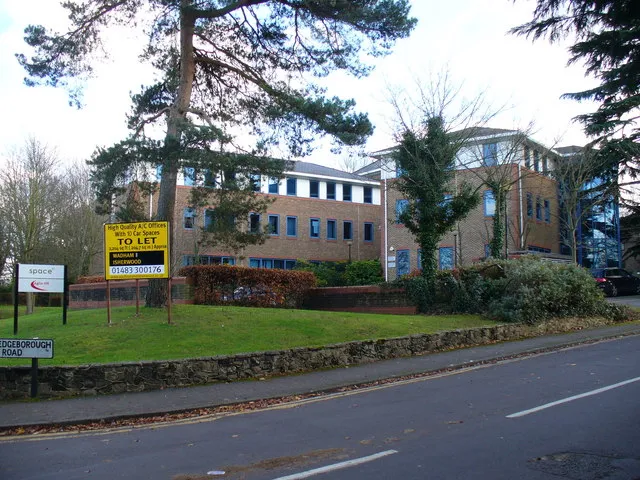
Photo: Colin Smith, CC BY-SA 2.0, via Wikimedia Commons
The downsizing nobody called a strategy
There was no grand announcement, no all-hands with a slide deck titled 'Our Remote Future'. A mid-sized agency we'll call Northgate Digital (not their real name, but their story is far from unique) simply couldn't justify the floor space anymore. Two big clients rolled off, half the team went permanent-remote during the pandemic and never properly came back, and the lease renewal landed on the desk of a finance director with a red pen.
So they took the smaller unit. Six desks instead of forty. Hot-desking, technically, though on any given Tuesday there might be four people in.
What's interesting is what happened next — or rather, what didn't happen. Nobody sat down and redesigned their processes for remote work. The office had been doing a quiet, unpaid job for years, and when it disappeared, a load of things it supported went with it.
The office was infrastructure all along
Ask anyone at Northgate what changed and they won't talk about standups or Slack etiquette first. They'll talk about the moment a junior dev got stuck on a gnarly bug for two days that would previously have taken twenty minutes.
'Before, you'd just lean over and go, "have you checked the middleware?"' one senior developer told us. 'Now that same interaction is a Slack message, a Teams call request, an hour of scheduling. So people don't ask. They just grind.'
This is the trade-off that never appears in the remote-work ROI spreadsheet. The office wasn't just desks — it was a low-friction mentoring engine. Over-the-shoulder debugging, corridor code reviews, the casual 'what are you working on?' that transfers context no documentation ever captures. All of it was free, all of it was ambient, and all of it is gone.
Onboarding through a keyhole
The first hires after the downsizing exposed the gaps fastest. New starters got a laptop in the post, a Notion page, and a Jira board. What they didn't get was the lore — the reasons behind the weird deploy script, the client who absolutely cannot have emails sent after 4pm, the fact that the staging environment lies.
Every codebase has this hidden layer. In an office, you absorb it by osmosis. Remotely, it has to be deliberately written down, and almost nobody budgets the time to do that.
Northgate's fix was unglamorous: a formal 'buddy' system where every new starter gets a named senior who's expected to do a daily 15-minute check-in for the first month. It costs real hours. It works anyway. The lesson generalises — anything the office did for free, remote-first has to pay for explicitly, in time, tooling, or both.
Code review culture, stretched thin
Code review changed shape too. In the office, a review comment often turned into a five-minute chat. Remotely, every comment is a written document, tone gets misread, and juniors take feedback harder when it arrives as a wall of text from a name they've barely spoken to.
Some teams have responded by mandating short video walkthroughs for anything non-trivial. Others have a rule that any review thread longer than five comments gets escalated to a call. It's process overhead, yes — but it's cheaper than the alternative, which is a junior who stops asking questions entirely.
The upside nobody wants to admit they got wrong
Here's the awkward part: the talent pool transformation has been genuinely brilliant. Pre-downsizing, Northgate hired from Leeds and commutable commuter towns. Now they've got developers in Hull, Wrexham, and a village outside Inverness — people who are excellent, loyal, and would never have relocated to a city office for a mid-tier salary.
One of their best recent hires is a returning parent who works 10 till 4 around the school run. Under the old model, that person simply wasn't employable. That's not a compromise; that's a competitive advantage.
If it happens by accident, at least fix it on purpose
Plenty of UK agencies are in Northgate's position — a shrunken office, a distributed team, and no deliberate plan connecting the two. If that's you, the honest checklist looks like:
- Budget mentorship time explicitly. If seniors spend 20% of their week helping juniors, that's not a cost — it's the job, and it needs to show in capacity planning.
- Write down the lore. The weird stuff, especially. Six months of 'why is it like this?' Slack threads is a documentation backlog.
- Make asking for help cheaper than suffering. A dedicated 'stuck?' channel with a no-judgement norm beats a private DM culture every time.
- Measure junior ramp-up time. It's the canary. If time-to-first-meaningful-PR is creeping up, your remote onboarding is leaking.
Going remote-first by accident worked out for Northgate, mostly. But the firms that thrive won't be the ones that stumbled into it — they'll be the ones who noticed what the office was quietly doing, and decided, deliberately, to do it better.